

ARIA Risk, APOE4 and Alzheimer’s Treatment Explained
When I was diagnosed with Alzheimer’s and learned that APOE could affect my risk of ARIA, I realized I didn't understand the difference between a gene, an allele, and a protein. This is the story of what I learned; what ARIA is; how to understand an APOE genetic blood test, what the risks are and how the risk is monitored.
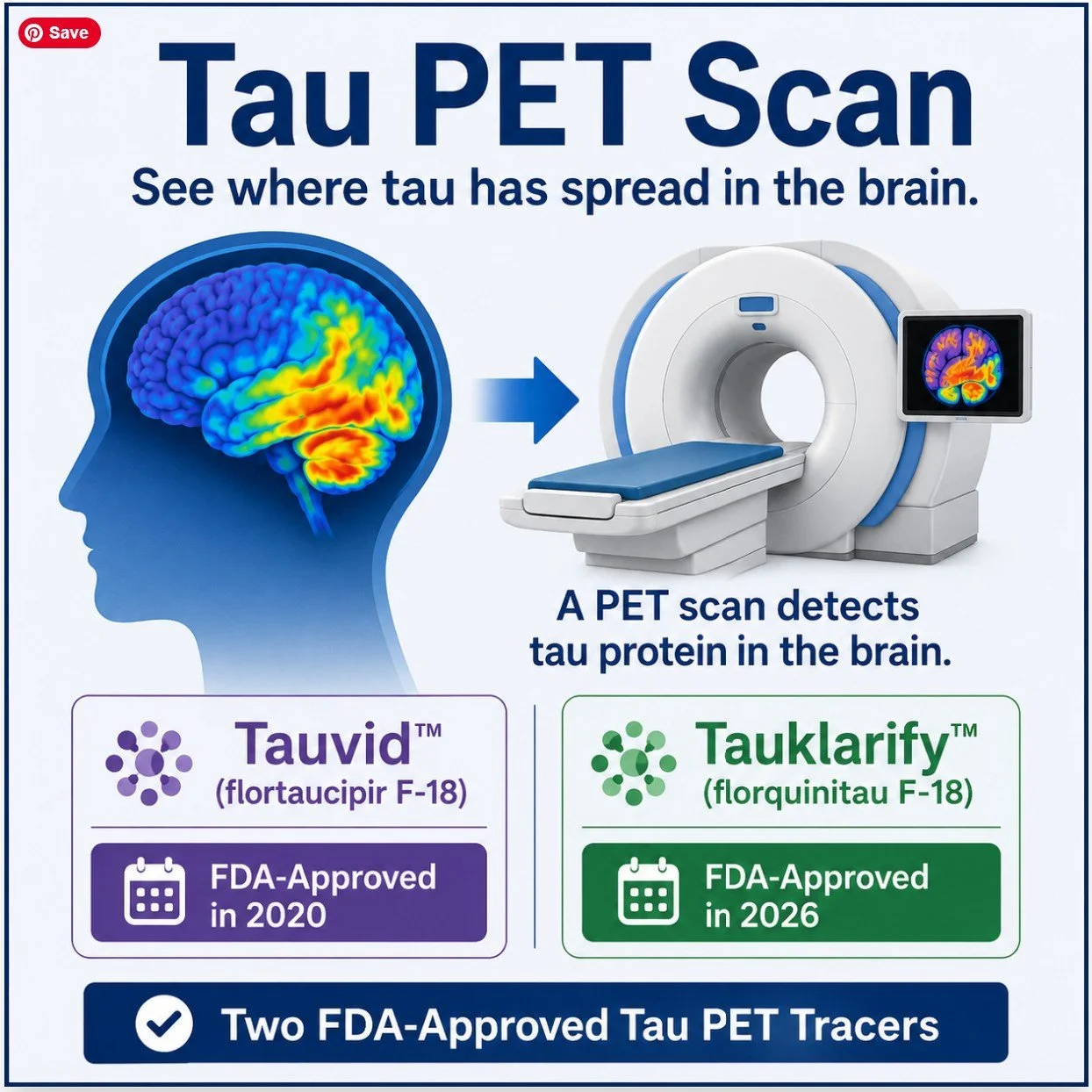
Tau PET Scans in Alzheimer’s
Tau PET is becoming an important new window into Alzheimer’s disease. With the August 2026 FDA approval of Tauklarify, clinicians now have two FDA-approved tau PET tracers—Tauvid and Tauklarify. Unlike amyloid testing, which helps identify whether Alzheimer’s biology is present, tau PET can show where aggregated tau has accumulated and how extensively it has spread. This high-level guide explains what tau PET adds, how the two tracers differ, and why tau imaging may become increasingly important for understanding disease stage and progression.

Leqembi = Plaque Free Brain and a Promising Future
Imagine being told you have Alzheimer's disease—and then, two years later, learning that the beta-amyloid plaques once filling your brain are no longer detectable on a PET scan. Until recently, that outcome would have seemed impossible. Thanks to early diagnosis and treatment with Leqembi, it became my reality. This is not a story about a cure. It is a story about what can happen when Alzheimer's is detected early enough for today's disease-modifying treatments to make a difference. It is also a story of gratitude—to the scientists who made this breakthrough possible—and a reminder that every adult over 60 should ask for a cognitive assessment before symptoms become impossible to ignore.