
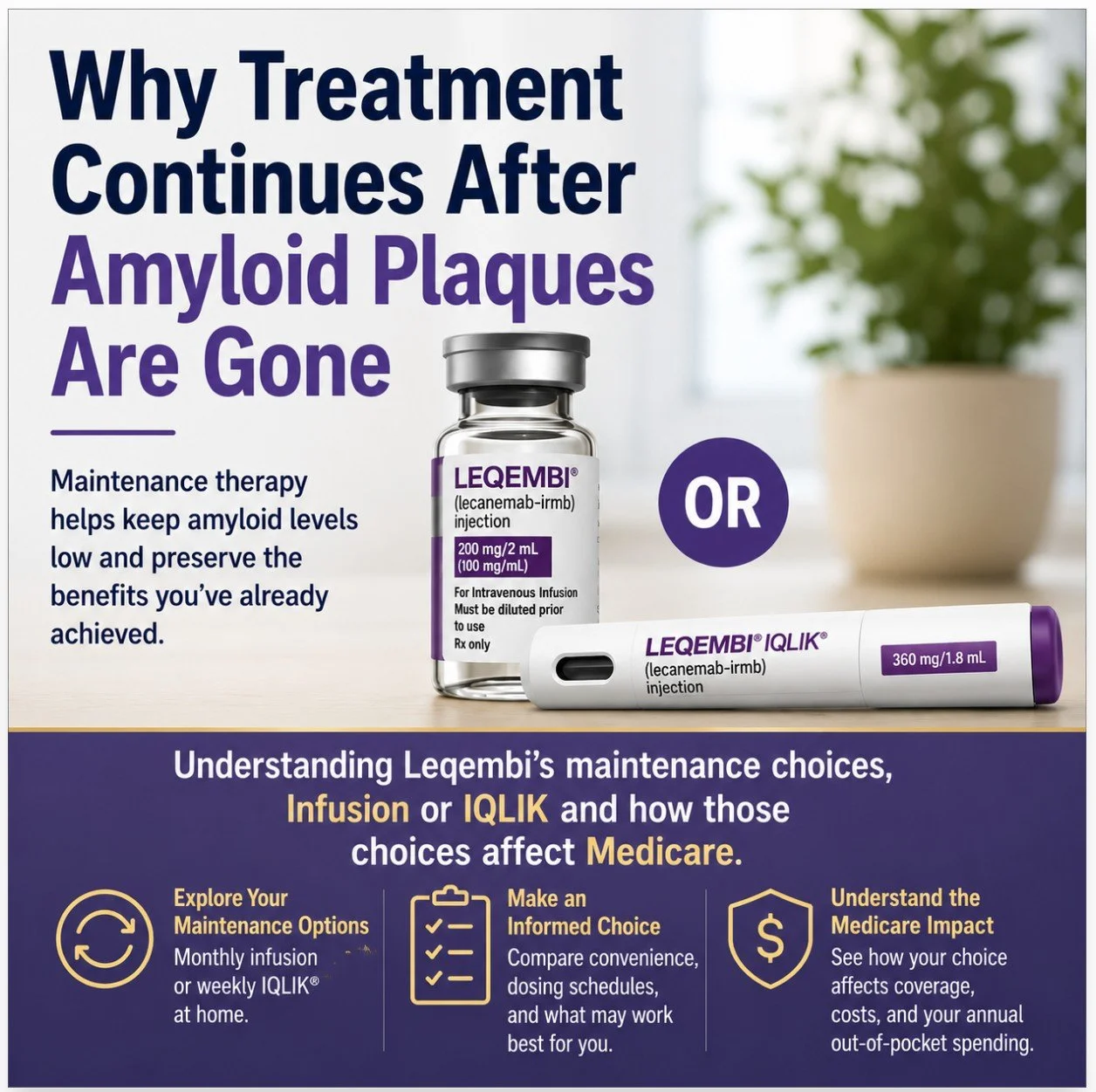
Everything You Need to Know About Leqembi Maintenance and Medicare
After Leqembi removes amyloid plaques from the brain, treatment isn't over. The brain continues to produce beta-amyloid every day, and in Alzheimer's disease a small amount escapes the brain's natural clearance systems. Without continued treatment, these molecules can gradually accumulate again, forming toxic oligomers, protofibrils, and eventually new plaques. This article explains why maintenance therapy is essential after the initial 18 months of Leqembi, compares monthly IV infusions with the FDA-approved IQLIK® self-injection, and provides a practical guide to Medicare Part B and Part D coverage, specialty pharmacies, formularies, prior authorization, and out-of-pocket costs so you can make informed decisions about your long-term treatment options.

How Leqembi and Kisunla Fight Alzheimer's in Different Ways
A diagnosis of Alzheimer's no longer means there are no treatment options. Two FDA-approved drugs, Leqembi and Kisunla, can slow the disease for people diagnosed early, but they work differently. Understanding how beta-amyloid changes from harmless protein fragments into toxic oligomers, protofibrils, plaques, and eventually tau tangles can help patients and families make more informed treatment decisions.